
Private Cab for Bikaner City Sightseeing
Bikaner is one of Rajasthan's strongest heritage destinations, but its attractions are spread between the walled city, the palace zone and the desert edge. A private Bikaner sightseeing cab keeps the day practical: your driver collects you from a hotel, railway station, bus stand or airport, waits during planned visits and drops you at the location agreed in advance. The route can be paced for families, senior citizens, couples or a group instead of forcing every traveller into one fixed schedule.
The city was founded by Rao Bika in 1488 and developed into an important desert kingdom. Its identity is visible in fortified architecture, red-stone havelis, royal museums, markets and the camel-based culture of the region. A sensible full-day circuit normally begins with the most time-intensive monument, Junagarh Fort, before moving through the old city and finishing near the Camel Research Centre or another sunset stop. Deshnok's Karni Mata Temple is outside the central city and should be treated as an extension, not squeezed into a short half-day plan.
Junagarh Fort, Havelis and Major Attractions
Junagarh Fort & Prachina Museum
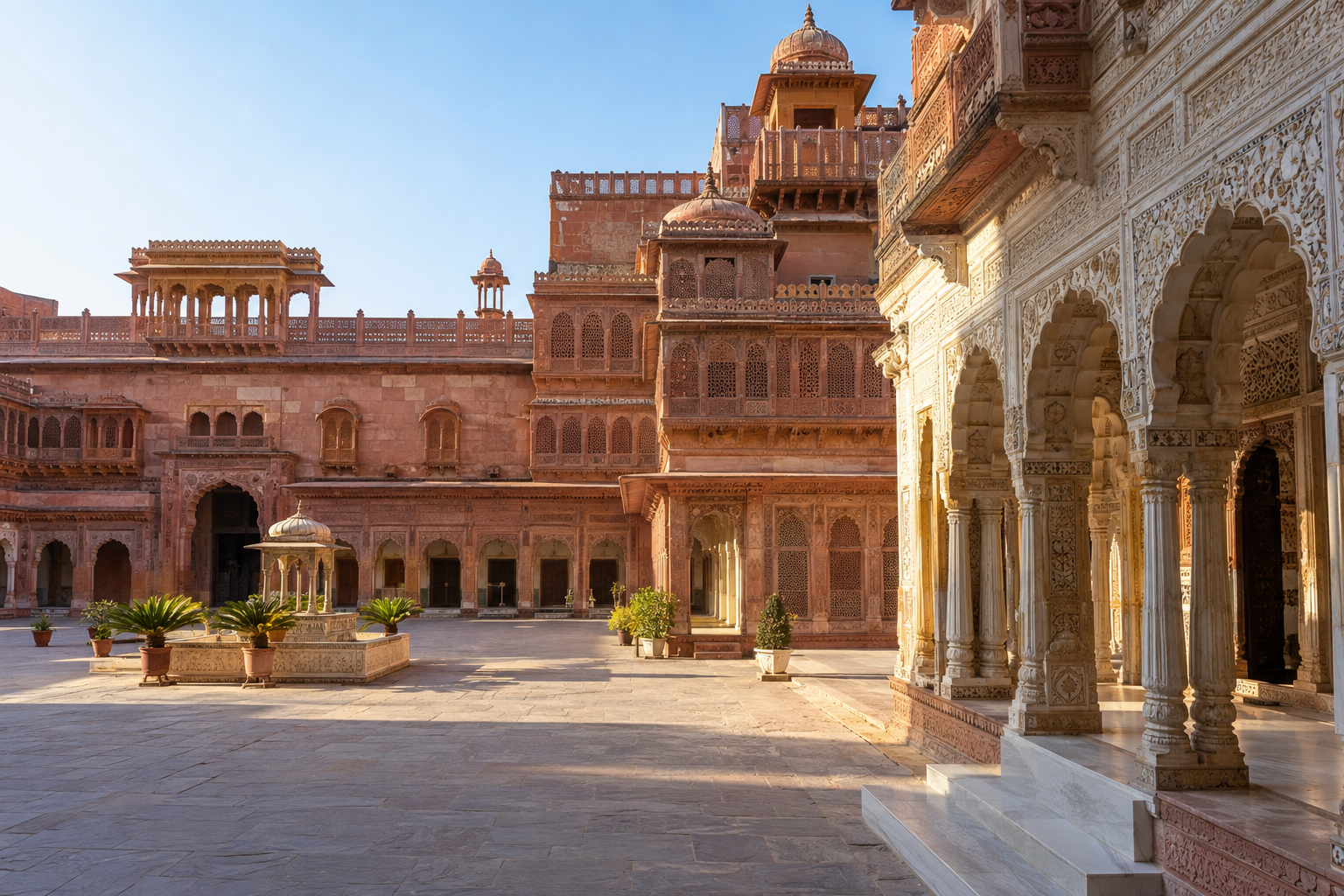
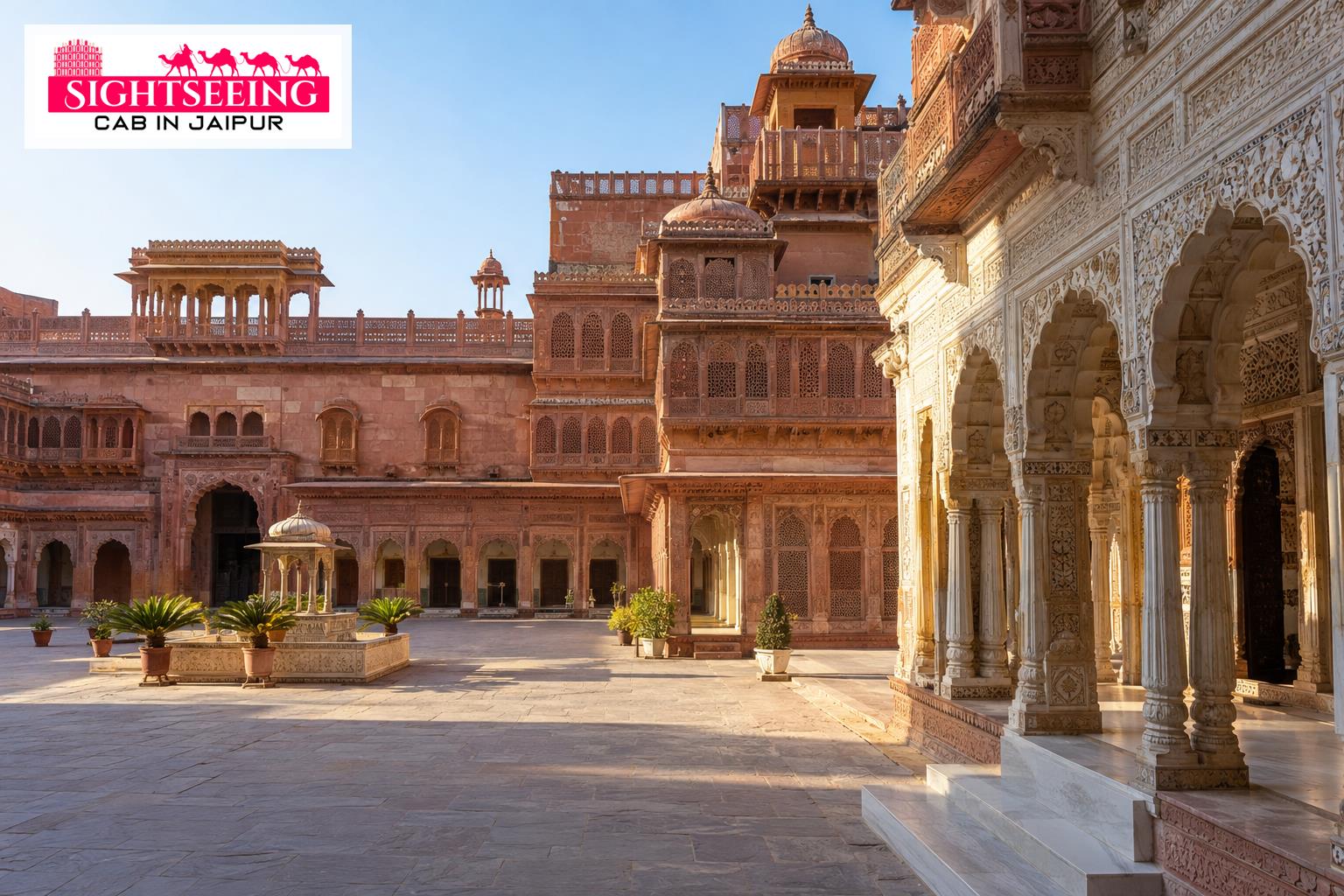
Unlike many Rajasthan forts, Junagarh stands on the plain rather than a hill. Its successive courtyards, palaces and decorated rooms show several phases of Bikaner's royal architecture. The fort was developed under Raja Rai Singh in the late sixteenth century, with later rulers adding halls and residences. Keep roughly 1.5 to 2 hours for the complex. Prachina Museum, within the fort precinct, focuses on royal costumes, textiles, portraits and decorative objects. Entry rules, combined tickets, camera charges and last-admission time can change, so confirm them at the official counter on the visit date.
Rampuria Havelis & Old City
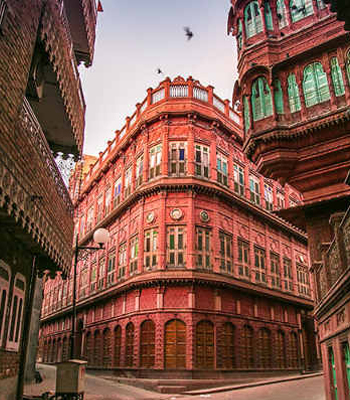
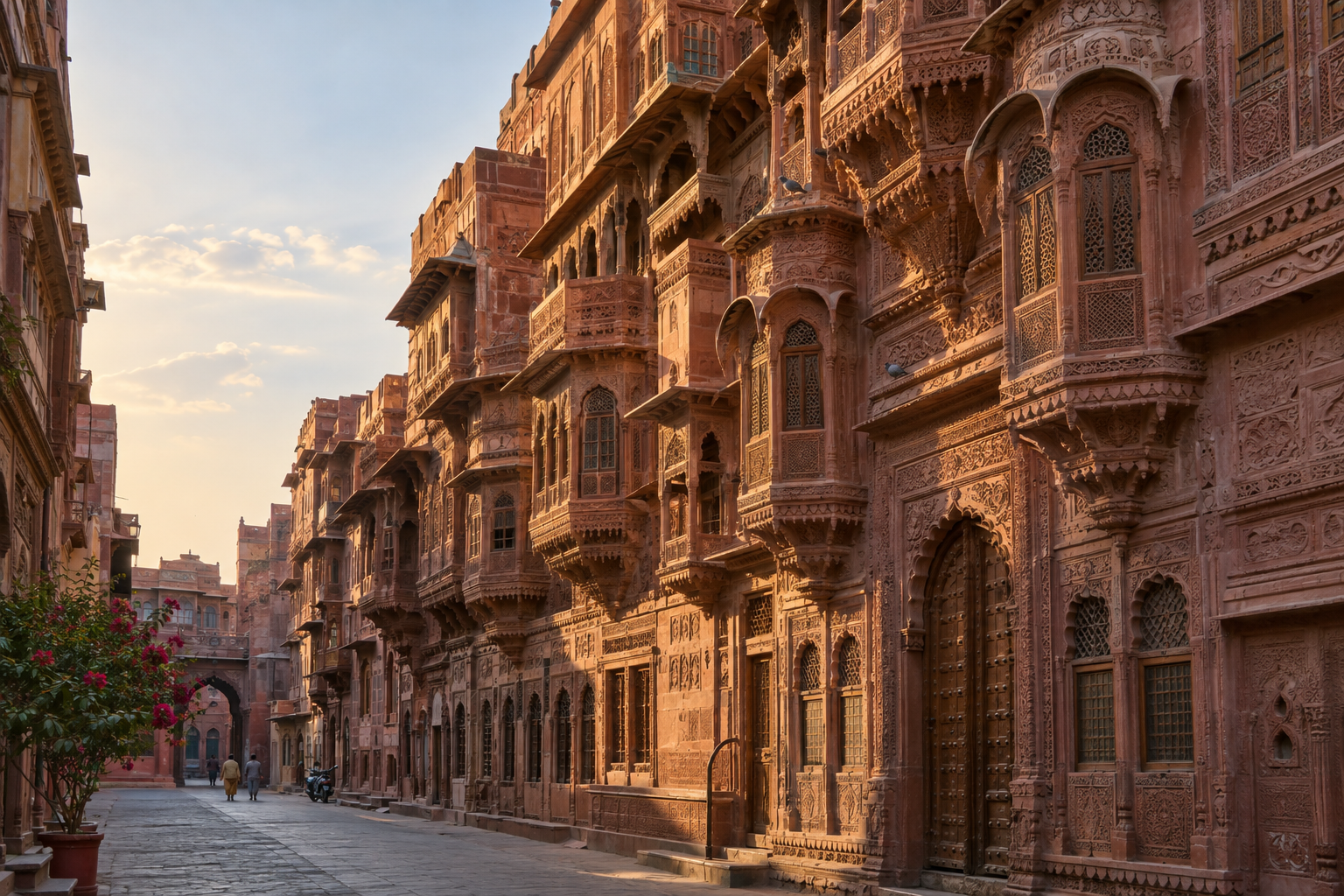
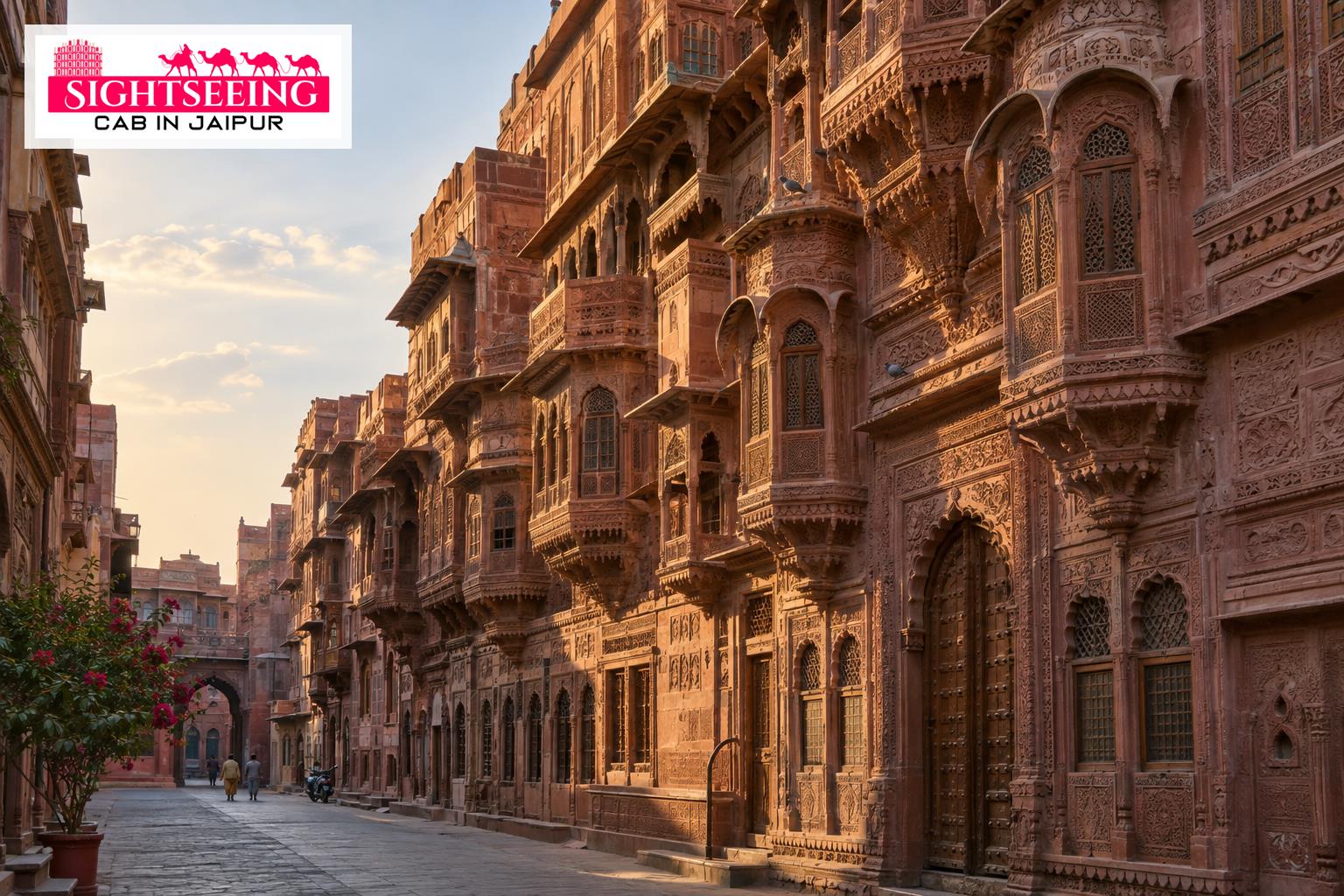
The Rampuria group is admired for carved dulmera red stone, projecting jharokhas, latticed windows and richly detailed façades. The lanes are living neighbourhoods rather than a staged attraction, so photography should remain respectful and entrances must not be blocked. Early morning usually provides softer light and easier movement. Combine the exterior walk with Kote Gate market for snacks, textiles and local crafts, allowing 45 to 60 minutes depending on traffic and shopping.
Lalgarh and Laxmi Niwas Palace
Lalgarh Palace was commissioned for Maharaja Ganga Singh and represents a blend of Rajput, Mughal and European influences. The adjoining Laxmi Niwas Palace, constructed between 1898 and 1902 and designed by Sir Samuel Swinton Jacob, is now used as a heritage hotel. Public access may be limited by hotel operations or events; therefore, treat interior viewing as subject to permission. The exterior architecture and museum component, when open, make this a useful 45-minute heritage stop.
National Research Centre on Camel
The ICAR National Research Centre on Camel lies about 8 kilometres from the city and is an animal-research institution rather than a conventional amusement park. A visit can introduce camel breeds, conservation work and camel-milk products where available. Visitor hours and weekly closures should be confirmed directly before departure. Keep animal welfare in mind: avoid activities that appear stressful, do not feed animals without permission and follow staff instructions.
Karni Mata Temple, Deshnok
The marble temple at Deshnok is around 30 kilometres from Bikaner and is known for the thousands of sacred rats, locally called kabas, that move freely in the precinct. Rajasthan Tourism records that its present construction was completed in the early twentieth century by Maharaja Ganga Singh. The temple is an active place of worship: remove footwear, dress modestly and follow local guidance. A round trip generally needs 2 to 2.5 hours including the visit, depending on traffic and queues.
Optional Gajner, Bhandasar or Museum Stop
Travellers with a second day can add Gajner Palace and lake outside Bikaner. Within the city, Bhandasar Jain Temple is known for murals, mirror work and gold-leaf details, while Ganga Government Museum displays archaeological finds, paintings, coins, crafts and weapons. Select one according to interest rather than rushing through every place. Weekly closures and religious timings must be checked before finalising the route.
Detailed One-Day Bikaner Sightseeing Itinerary
8:30 AM – Pickup and Junagarh Fort
Meet the driver at your Bikaner hotel, railway station or agreed pickup point. Start with Junagarh Fort while energy levels are high and allow adequate time for palace rooms and museum displays.
11:00 AM – Lalgarh Palace Area
Continue to Lalgarh Palace and Laxmi Niwas Palace. Access depends on current operating arrangements; if an interior is unavailable, the driver can adjust the time towards a museum or temple.
12:30 PM – Lunch and Local Flavours
Stop for a clean restaurant selected according to dietary preferences. Bikaneri bhujia, kachori and sweets are popular, but travellers should choose freshly prepared food and sealed drinking water.
2:00 PM – Rampuria Havelis and Kote Gate
Walk through the heritage lanes for façade photography, then browse Kote Gate market if desired. The cab may park outside tighter lanes; wear comfortable footwear.
4:00 PM – Camel Centre or Museum
Visit the National Research Centre on Camel when its current visitor hours permit. Otherwise choose Ganga Government Museum, Bhandasar Jain Temple or more old-city time.
6:00 PM – Drop-off
Return to the hotel, station or another agreed city location. An extended itinerary with Deshnok should start earlier and may finish later.
Pickup, Duration and What Is Included
Pickup can be arranged from Bikaner city hotels, Bikaner Junction, the bus stand or Nal Airport subject to the confirmed quotation. A standard city tour is usually planned for approximately 8 hours; an extended circuit may require 10 hours or more. The quoted cab package should clearly mention vehicle category, included kilometres and hours, driver allowance, fuel, tolls, state taxes and parking. Monument tickets, guides, meals, camera fees and optional activities are normally separate unless written into the confirmation.
Choose the vehicle by passengers plus luggage, not seats alone. A sedan is practical for up to four travellers with light bags, an SUV gives a family more space, and a Tempo Traveller suits a group. Ask for the vehicle model or equivalent category and the extra-hour and extra-kilometre rate before paying an advance.